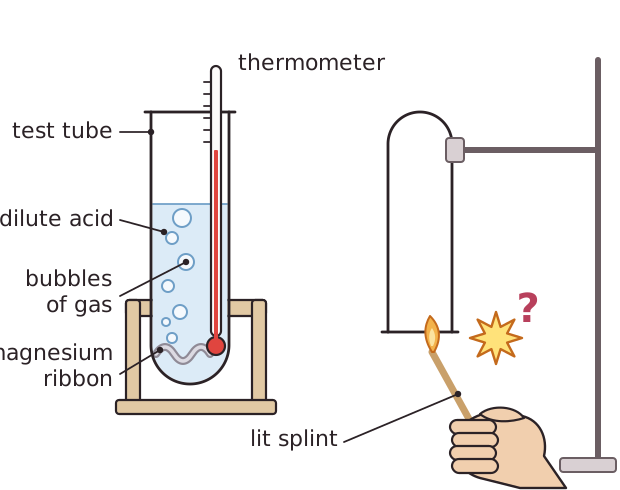
Acids react with some metals to produce a salt and hydrogen. At GCSE you need the reactions of magnesium, zinc and iron with hydrochloric acid and sulfuric acid. During the reaction you see bubbles of gas, the metal gets smaller and finally disappears, and the mixture warms up. Hydrogen gas is identified with a lighted splint, which makes a squeaky pop.
The name of the salt depends on the acid. Hydrochloric acid produces salts called chlorides and sulfuric acid produces salts called sulfates. The first part of the name is simply the metal.
- magnesium + hydrochloric acid → magnesium chloride + hydrogen: Mg + 2HCl → MgCl2 + H2
- zinc + sulfuric acid → zinc sulfate + hydrogen: Zn + H2SO4 → ZnSO4 + H2
- iron + hydrochloric acid → iron(II) chloride + hydrogen: Fe + 2HCl → FeCl2 + H2
Higher tier only: these are redox reactions. The metal atoms lose electrons, so the metal is oxidised: Mg → Mg2+ + 2e-. The hydrogen ions from the acid gain electrons, so they are reduced: 2H+ + 2e- → H2. The chloride or sulfate ions do not change.