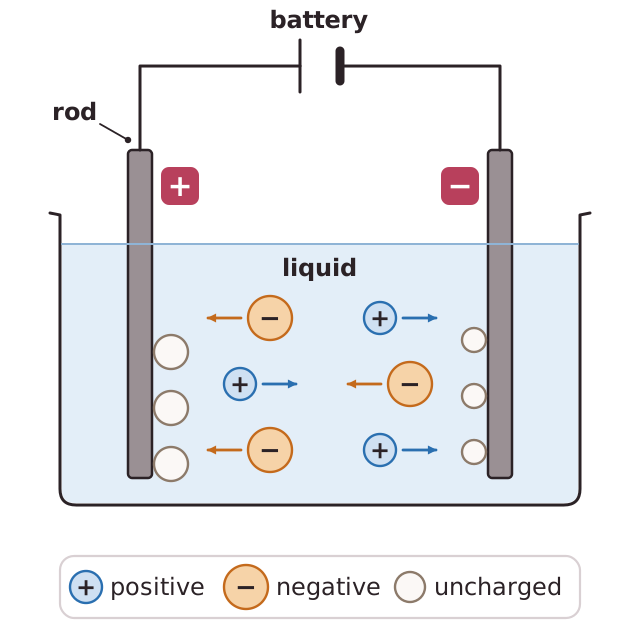
Solid ionic compounds do not conduct electricity because their ions are held in fixed positions. When an ionic compound is melted, or dissolved in water, the ions are free to move about within the liquid or solution. These liquids and solutions can conduct electricity and are called electrolytes.
When an electric current is passed through an electrolyte, the ions move to the electrodes. Positively charged ions move to the negative electrode, which is called the cathode. Negatively charged ions move to the positive electrode, which is called the anode. The ions are discharged at the electrodes, which means they are changed into uncharged atoms, so elements are produced.
This whole process is called electrolysis. A useful way to remember the electrodes is that opposite charges attract: positive ions are attracted to the negative cathode, and negative ions are attracted to the positive anode.