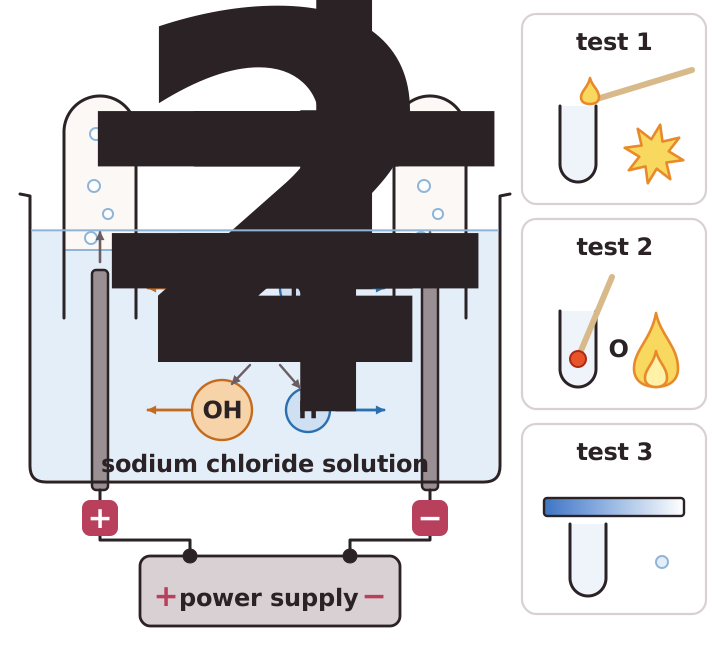
An aqueous solution contains the dissolved ionic compound and also water. Water molecules break down a little, producing hydrogen ions, H+, and hydroxide ions, OH-. So at each electrode there are two possible ions that could be discharged, and which one is discharged depends on the relative reactivity of the elements involved. Inert electrodes are used so that they do not react.
At the negative electrode (cathode), hydrogen is produced if the metal is more reactive than hydrogen. If the metal is less reactive than hydrogen, the metal itself is produced. At the positive electrode (anode), oxygen is produced unless the solution contains halide ions (chloride, bromide or iodide), in which case the halogen is produced.
Examples: sodium chloride solution gives hydrogen at the cathode and chlorine at the anode. Copper sulfate solution gives copper at the cathode, because copper is less reactive than hydrogen, and oxygen at the anode, because sulfate ions are not halide ions. Potassium sulfate solution gives hydrogen and oxygen.
Required practical 3: you electrolyse aqueous solutions using inert electrodes and write a hypothesis predicting the products. You observe the electrodes: bubbles of gas show hydrogen, oxygen or a halogen, and a brown or pink coating shows copper. Hydrogen gives a squeaky pop with a lit splint, oxygen relights a glowing splint, and chlorine bleaches damp litmus paper.