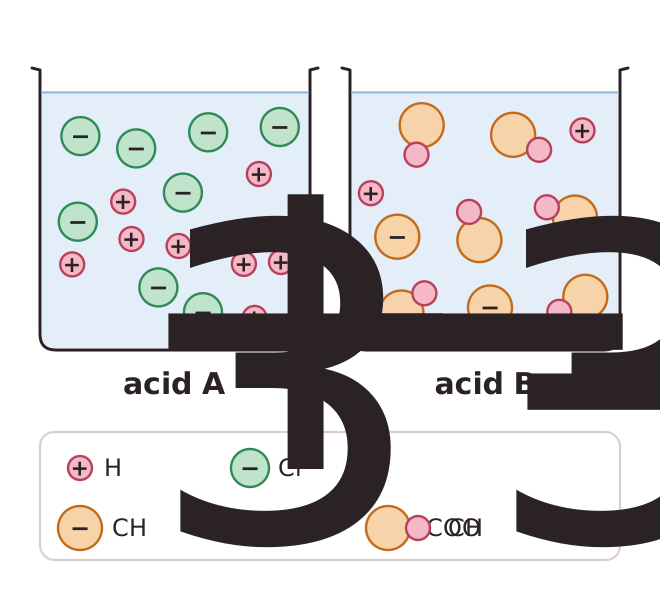
A strong acid is completely ionised in aqueous solution. Every acid molecule splits to release a hydrogen ion. Hydrochloric, nitric and sulfuric acids are strong acids: HCl → H+ + Cl-. A weak acid is only partially ionised, so most of its molecules stay as they are and only some release hydrogen ions. Ethanoic, citric and carbonic acids are weak acids.
Do not mix up strong and weak with concentrated and dilute. Strong and weak describe the degree of ionisation. Concentrated and dilute describe the amount of acid dissolved in a given volume of solution. You can have a dilute solution of a strong acid or a concentrated solution of a weak acid.
For solutions of the same concentration, the stronger the acid, the lower the pH, because more of the acid is ionised and the hydrogen ion concentration is higher. The pH is linked to the hydrogen ion concentration: as the pH decreases by one unit, the hydrogen ion concentration increases by a factor of 10. A solution with a pH of 2 therefore has a hydrogen ion concentration 100 times higher than a solution with a pH of 4.