 BRAINCAKE
Hydrogen Bonds
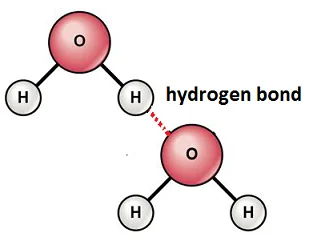
Hydrogen bonds are permanent dipole-dipole interactions between the hydrogen in a H-F, H-N or H-O bond and an electronegative atom containing a lone pair such as oxygen, nitrogen and fluorine and are the strongest type of intermolecular interactions having some covalent character.
The shape around the hydrogen atom is linear.
Sign in free to see the rest of this lesson, the R.E.C.I.P.E. recall steps and the quiz
BrainCake is free. Make an account in seconds and pick up where this page stops.
Key terms in this lesson
- Base
- A proton acceptor.
- Lone pair
- A pair of outer-shell electrons that is not involved in bonding.
- Dipole
- A separation of opposite partial charges caused by an uneven distribution of the bonding electron pair.
- Permanent dipole-dipole interactions
- Attractive forces between the permanent dipoles of polar molecules.
More in Shapes and Intermolecular Forces
- More examples.
- Electronegativity
- Bond Polarity
- Polar Solvents and Solubility
- Induced Dipole-Dipole Interactions (London Forces)
- Permanent dipole-dipole interactions
- Solubility of Simple Molecules
- Boiling Points of Hydrides and Intermolecular forces
All 13 lessons in Shapes and Intermolecular Forces · All OCR AS-level Chemistry topics