 BRAINCAKE
The Rate of Reaction
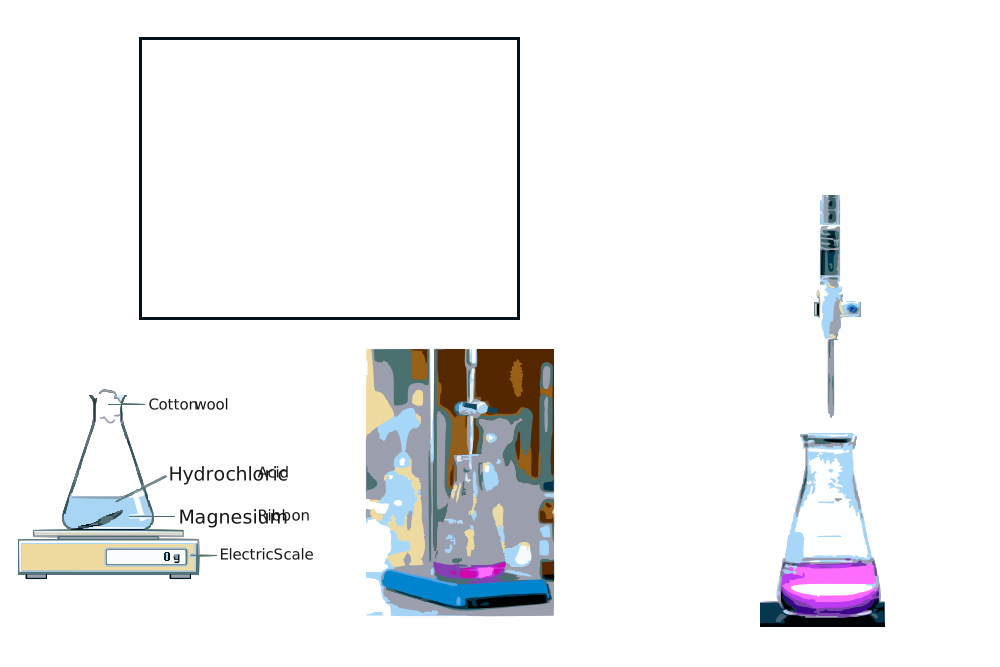
The rate of a reaction is measured by the change in concentration over time. The rate of reaction is how fast the reactants are being used up or how fast a product is formed. The rate of reaction is fastest at the start of a reaction then decreases at the reactants are used up and their concentrations fall. Once all the reactant are used up the reaction ends and the rate is equal to zero.
Sign in free to see the rest of this lesson, the R.E.C.I.P.E. recall steps and the quiz
BrainCake is free. Make an account in seconds and pick up where this page stops.
More in Reaction Rates
- Factors affecting the Rate of a Chemical Reaction
- Following the Progress of a Reaction
- Catalysts
- Homogenous Catalysts
- Heterogenous Catalysts
- Catalysts and Sustainability
- Autocatalysis
- The Boltzmann Distribution Curve and Temperature
All 10 lessons in Reaction Rates · All OCR AS-level Chemistry topics