Fossil fuels such as coal, crude oil and natural gas contain small amounts of sulfur compounds as impurities. When the fuel burns, the sulfur is oxidised to sulfur dioxide:
S + O2 → SO2
Acid rainSulfur dioxide dissolves in water droplets in clouds to form sulfurous acid:
SO2 + H2O → H2SO3
It can also be oxidised in the air to sulfur trioxide, which forms sulfuric acid:
2SO2 + O2 → 2SO3
SO3 + H2O → H2SO4
The resulting acid rain:
damages buildings and statues made of limestone and marble (calcium carbonate), and corrodes metals;
acidifies lakes and rivers, killing fish and other aquatic life;
damages trees and plants and removes nutrients from soil.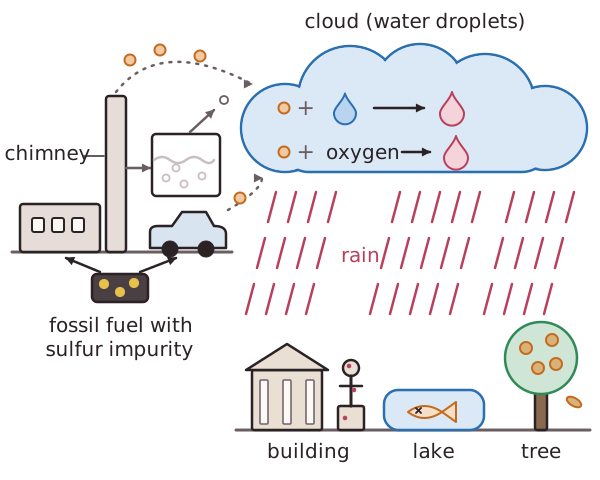 Sulfur dioxide is also toxic and irritates the lungs, making asthma worse.Reducing sulfur dioxideSulfur is removed from petrol and diesel at the refinery before the fuel is sold, so road vehicles now produce very little SO2.
In flue gas desulfurisation, the waste gases from power stations are passed through a slurry of calcium oxide or calcium carbonate, which reacts with the acidic SO2:
CaO + SO2 → CaSO3
CaCO3 + SO2 → CaSO3 + CO2
Worked example: 1 mol of sulfur (32.1 g) forms 1 mol of SO2, mass 32.1 + 2 × 16.0 = 64.1 g.
Acid rainSulfur dioxide dissolves in water droplets in clouds to form sulfurous acid:
It can also be oxidised in the air to sulfur trioxide, which forms sulfuric acid:
The resulting acid rain:
damages buildings and statues made of limestone and marble (calcium carbonate), and corrodes metals;
acidifies lakes and rivers, killing fish and other aquatic life;
damages trees and plants and removes nutrients from soil.
Sulfur dioxide is also toxic and irritates the lungs, making asthma worse.Reducing sulfur dioxideSulfur is removed from petrol and diesel at the refinery before the fuel is sold, so road vehicles now produce very little SO2.In flue gas desulfurisation, the waste gases from power stations are passed through a slurry of calcium oxide or calcium carbonate, which reacts with the acidic SO2:
Worked example: 1 mol of sulfur (32.1 g) forms 1 mol of SO2, mass 32.1 + 2 × 16.0 = 64.1 g.