 BRAINCAKE
Alkanes from Crude Oil
Crude oil is a mixture of hydrocarbons, mostly alkanes, with chains from one to over fifty carbon atoms. It is formed from the remains of sea creatures over millions of years, so it is a finite, non-renewable resource.
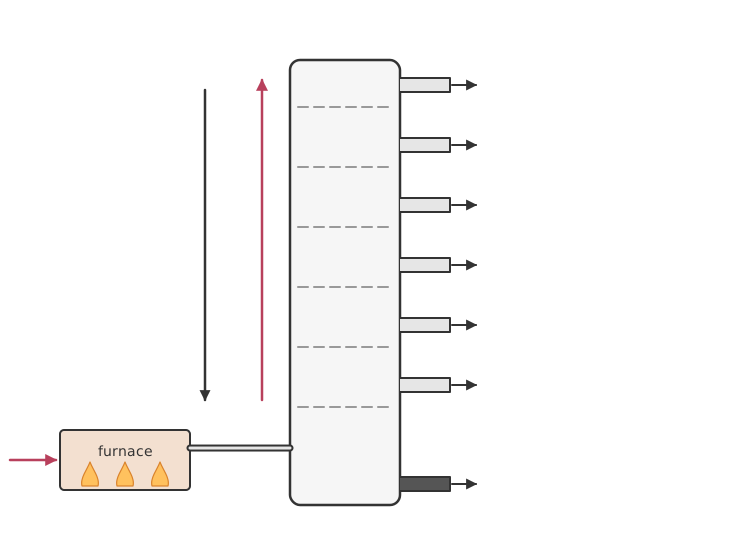
A mixture is not useful as it is, so crude oil is separated into fractions by fractional distillation. A fraction is a mixture of hydrocarbons with similar chain lengths and a similar range of boiling points.
1. Crude oil is heated in a furnace to about 350 °C, so most of it vaporises.
2. The vapour passes into a tall fractionating column, which is hot at the bottom and cooler at the top (a temperature gradient).
Sign in free to see the rest of this lesson, the R.E.C.I.P.E. recall steps and the quiz
BrainCake is free. Make an account in seconds and pick up where this page stops.
Key terms in this lesson
- london forces
- Weak intermolecular forces caused by instantaneous dipoles inducing dipoles in neighbouring molecules, present between all molecules.
More in Alkanes
- Alkanes
- Cracking
- Reforming
- Combustion of Alkanes
- Oxides of Sulfur
- Oxides of Nitrogen
- Catalytic Converters
- Alternative Fuels
All 14 lessons in Alkanes · All Edexcel AS-level Chemistry topics