Biofuels are often described as better for the environment than fossil fuels, but the comparison needs care.The carbon-neutral argumentCrops absorb carbon dioxide from the air as they grow, by photosynthesis:
6CO2 + 6H2O → C6H12O6 + 6O2
Fermentation of the glucose releases 2 CO2:
C6H12O6 → 2C2H5OH + 2CO2
Burning the two ethanol molecules releases 4 CO2:
2C2H5OH + 6O2 → 4CO2 + 6H2O
Total released: 2 + 4 = 6 CO2, the same as the 6 absorbed. So in theory there is no net release of carbon dioxide: the fuel is carbon neutral. Fossil fuels release carbon that was locked away millions of years ago, which increases the CO2 in the atmosphere.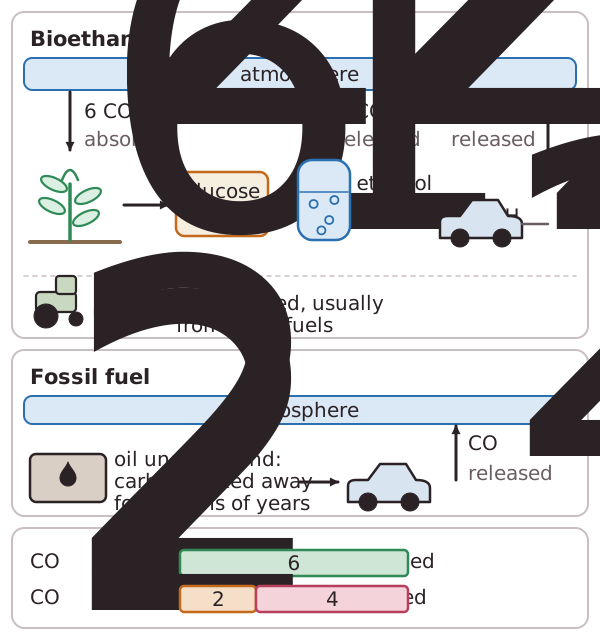 Advantages of biofuels
Renewable; lower net CO2 emissions; little or no sulfur, so less SO2; biodiesel and biogas can use waste materials.Disadvantages of biofuels
They are not truly carbon neutral: energy, usually from fossil fuels, is used for farm machinery, making fertilisers, transport and distilling the ethanol.
Land used for fuel crops cannot grow food, which can raise food prices; forests may be cleared to make space, destroying habitats.
Ethanol releases less energy per litre than petrol, and older engines may need modifying to run on high blends.Fossil fuels give a lot of energy per kilogram and have a well-developed supply system, but they are finite and add CO2 to the atmosphere.
Fermentation of the glucose releases 2 CO2:
Burning the two ethanol molecules releases 4 CO2:
Total released: 2 + 4 = 6 CO2, the same as the 6 absorbed. So in theory there is no net release of carbon dioxide: the fuel is carbon neutral. Fossil fuels release carbon that was locked away millions of years ago, which increases the CO2 in the atmosphere.
Advantages of biofuelsRenewable; lower net CO2 emissions; little or no sulfur, so less SO2; biodiesel and biogas can use waste materials.Disadvantages of biofuels
They are not truly carbon neutral: energy, usually from fossil fuels, is used for farm machinery, making fertilisers, transport and distilling the ethanol.
Land used for fuel crops cannot grow food, which can raise food prices; forests may be cleared to make space, destroying habitats.
Ethanol releases less energy per litre than petrol, and older engines may need modifying to run on high blends.Fossil fuels give a lot of energy per kilogram and have a well-developed supply system, but they are finite and add CO2 to the atmosphere.