 BRAINCAKE
The Periodic Table
Mendeleev arranged the (approx) 60 known elements in order of "atomic weight" in groups with similar properties and left gaps for undiscovered elements. When protons were discovered in the 1900s the reason for the pattern became clear.
The modern periodic table has 114 elements arranged in order of atomic number in vertical columns called groups and rows called periods.
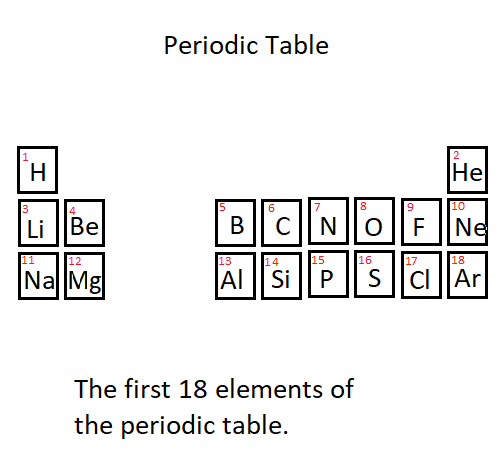
Sign in free to see the rest of this lesson, the R.E.C.I.P.E. recall steps and the quiz
BrainCake is free. Make an account in seconds and pick up where this page stops.
Key terms in this lesson
- Atomic number
- The number of protons in the nucleus of an atom.
- Electron configuration
- The arrangement of electrons in an atom's shells and sub-shells, written using numbers and letters such as 1s2 2s2.
- Group
- A vertical column of the periodic table, containing elements with the same number of outer-shell electrons.
- Period
- A horizontal row of the periodic table, containing elements with the same number of electron shells.
More in Periodicity
- Metals and Non-Metals
- s, p, d and f Block
- Groups
- Periods
- Reactivity
- Hydrogen and Helium
- Periodicity and Period 3 Elements
- Trends in Melting and Boiling Points
All 14 lessons in Periodicity · All AQA AS-level Chemistry topics