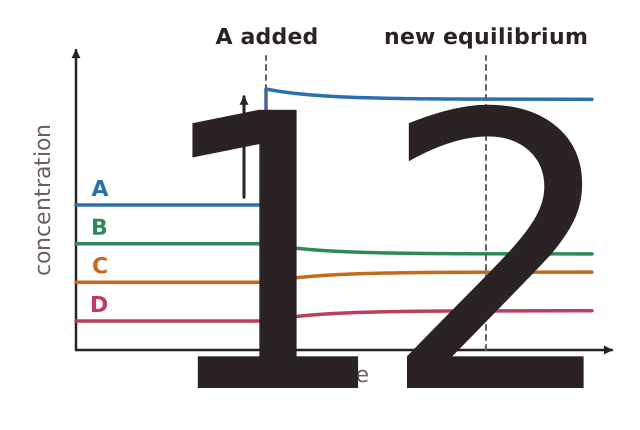
If the concentration of the reactants is increased the equilibrium will shift to the right. More collisions will take place between the molecules of the reactants and the rate of the forward reaction will increase so more products will form. The concentration of the reactants will decrease until the rate of the forward reaction once again equals the rate of the reverse reaction and equilibrium is re-established.If the concentration of the products is increased the position of equilibrium will shift to the left. More collisions will take place between the molecules of the products and the rate of the reverse reaction will increase so more reactants will form. The concentration of the products will decrease until the rate of the forward reaction once again equals the rate of the reverse reaction and equilibrium is re-established.