Fracking (hydraulic fracturing) is a method of extracting natural gas and oil trapped in shale rock deep underground.A well is drilled down and then horizontally through the shale. A mixture of water, sand and chemicals is pumped in at very high pressure. This cracks the rock, and the sand holds the cracks open so that the gas, mainly methane, can flow out.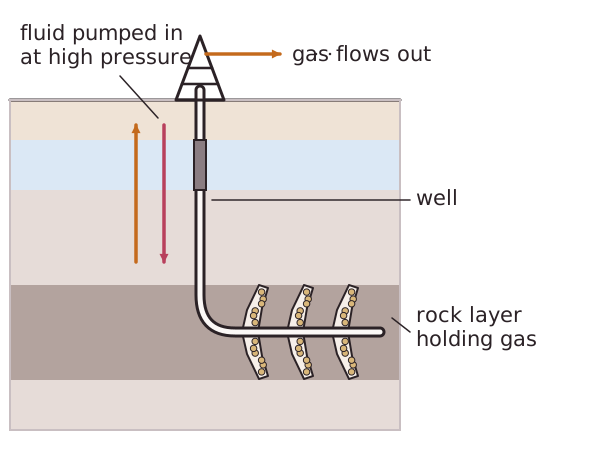 Supporters argue that shale gas increases a country's energy security, reduces imports and is a cleaner fuel than coal because it releases less CO2 per unit of energy.Concerns include contamination of groundwater by the chemicals or by methane, the large volumes of water used, small earthquakes caused by the process, and methane leaks. Methane is a powerful greenhouse gas, and burning shale gas still adds CO2 to the atmosphere.