Thin-layer chromatography (TLC) is a quick way to find how many components a mixture contains, and to compare them with known substances.The stationary phase is a thin layer of silica (SiO2) or alumina (Al2O3) on a glass, metal or plastic plate. The mobile phase is a solvent. Separation is by adsorption.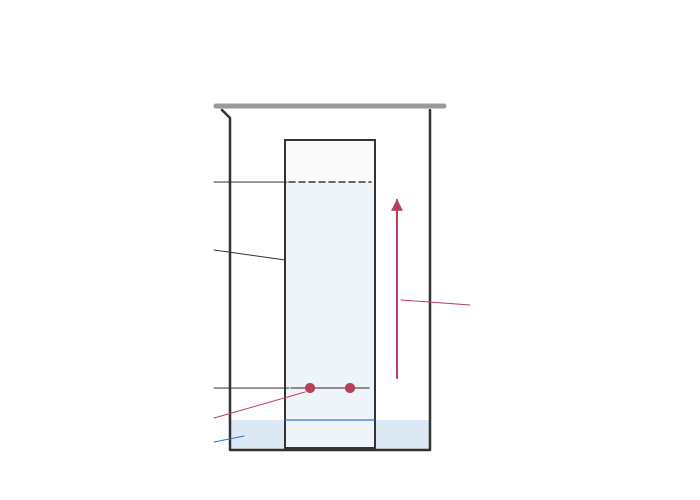
2. Use a capillary tube to put a small spot of each sample on the baseline.
3. Stand the plate in a beaker with solvent below the baseline, so the spots do not dissolve into the solvent. Cover with a lid so the air is saturated with solvent vapour.
4. When the solvent has nearly reached the top, remove the plate and mark the solvent front in pencil straight away, before it evaporates.
5. Dry the plate and locate colourless spots under UV light or with iodine, then circle them.The number of spots shows the minimum number of components. Spots at the same height as a known reference, run on the same plate, suggest the same compound.Worked example: a sample gives three spots, one level with pure aspirin. The sample contains aspirin and at least two impurities.