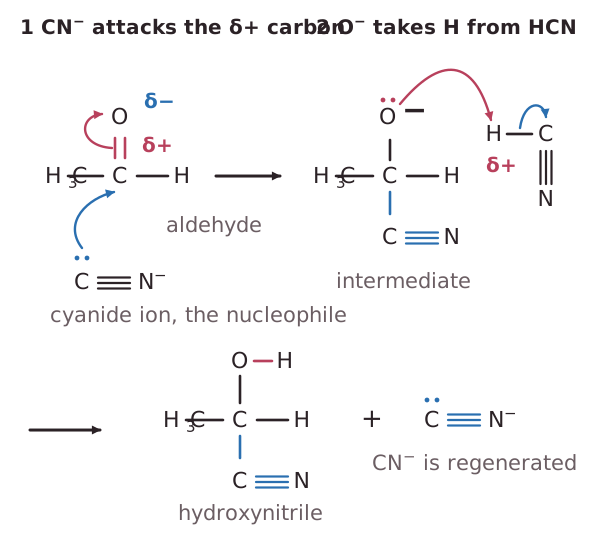
Aldehydes and Ketones react with HCN to give hydroxynitriles. HCN is not used as it is an extremely poisonous gas. Instead KCN or sodium cyanide is acidified with a little sulfuric acid. The solution contains free cyanide ions and some hydrogen cyanide (HCN) from the reaction between the KCN and acid.The reaction is a nucleophilic addition. The CN- ion acts as the nucleophile and attacks the electron-deficient, slightly-positive carbon atom. A dative covalent bond is formed between the CN- and the carbon atom of the carbonyl group. The reaction is completed by the addition of a hydrogen atom from the acid, water or HCN molecule.