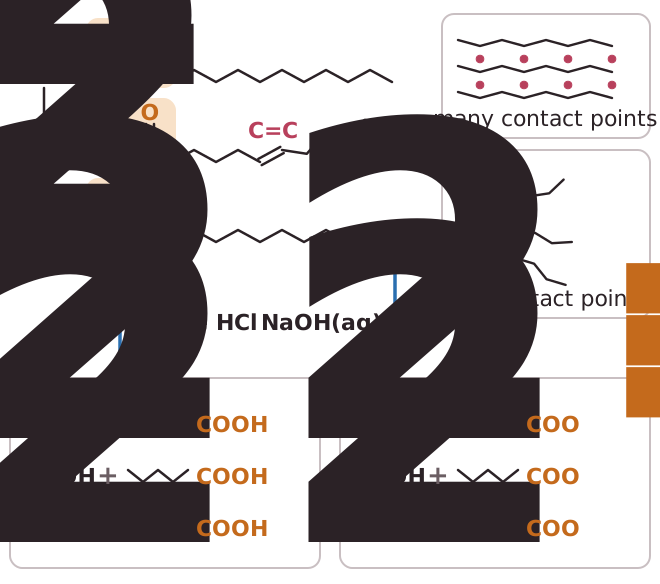
Animal and vegetable fats and oils are esters of long-chain carboxylic acids (fatty acids) and glycerol (propane-1,2,3-triol) and are known as triglycerides. Unsaturated fats have at least one double bond in a fatty acid. The presence of a double bond reduces the melting point as there are fewer points of surface contact so there are fewer London forces.Acid hydrolysis of fats or oils with dilute hydrochloric acid produces glycerol and three fatty acids. Alkaline hydrolysis with aqueous sodium hydroxide produces glycerol and the sodium salt of the fatty acids which are known as soaps. This process is called saponification.