Skip to content

Physical Properties of Carboxylic Acids

The carboxyl group contains a polar C=O bond and a polar O-H bond, so carboxylic acids can form hydrogen bonds. This controls their boiling temperatures and solubility.Boiling temperatures: carboxylic acid molecules hydrogen bond strongly to each other. In the pure liquid, and even in the vapour, pairs of molecules join to form dimers, held together by two hydrogen bonds between the C=O of one molecule and the O-H of the other. This effectively doubles the size of the particle, so the London forces between dimers are also larger.
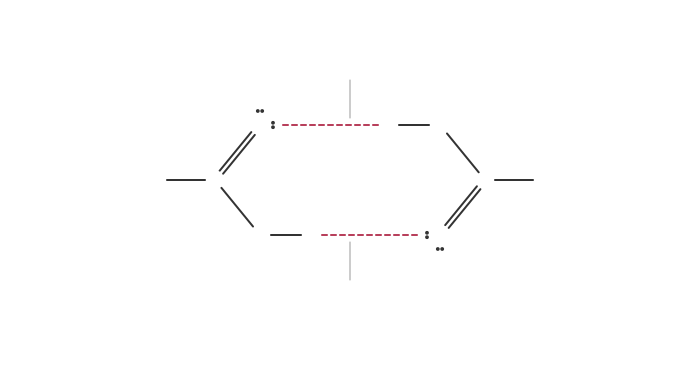
As a result, carboxylic acids have higher boiling temperatures than alcohols of similar relative molecular mass.Worked example: ethanoic acid and propan-1-ol both have Mr = 60. Ethanoic acid boils at 118 °C, but propan-1-ol boils at only 97 °C. The acid molecules form dimers held by two hydrogen bonds, so more energy is needed to separate them.Solubility: the acids with up to four carbon atoms (methanoic to butanoic acid) mix completely with water, because the COOH group forms hydrogen bonds with water molecules. As the hydrocarbon chain gets longer, solubility falls, because the non-polar chain cannot hydrogen bond with water and disrupts the hydrogen bonding between water molecules. Benzoic acid is only slightly soluble in cold water.Smell: the short-chain acids have sharp, unpleasant smells: ethanoic acid smells of vinegar and butanoic acid of rancid butter.

Read the text

Read the text and highlight anything you think is important. When you go on, the text is hidden and you answer from memory.