 BRAINCAKE
Structure of DNA Nucleotides
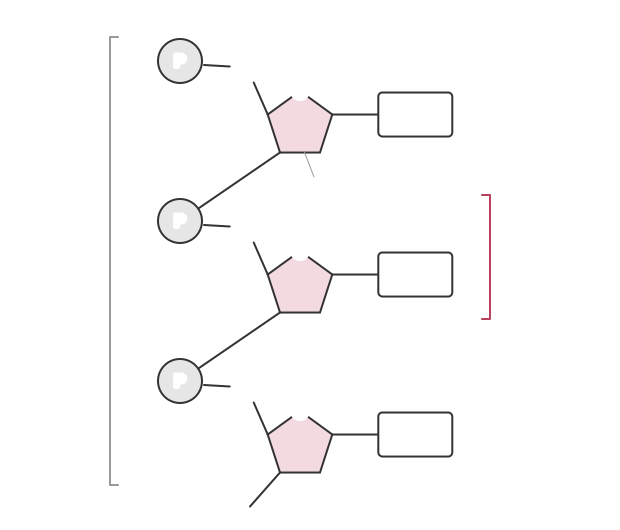
DNA (deoxyribonucleic acid) is a polymer made of monomers called nucleotides. Each nucleotide has three parts:
• a phosphate group
• the sugar 2-deoxyribose, a pentose (five-carbon) sugar with a five-membered ring containing an oxygen atom
• one of four nitrogen-containing bases: adenine (A), cytosine (C), guanine (G) or thymine (T)
The structures of these parts are given in the AQA data booklet, so you do not need to memorise them, but you should be able to recognise them and show how they join.
In a nucleotide, the phosphate is bonded to the CH2 carbon (carbon 5) of 2-deoxyribose, and the base is bonded through one of its nitrogen atoms to carbon 1 of the sugar.
Sign in free to see the rest of this lesson, the R.E.C.I.P.E. recall steps and the quiz
BrainCake is free. Make an account in seconds and pick up where this page stops.
More in Amino Acids, Proteins and DNA
- Secondary Structure of Proteins
- Tertiary Structure of Proteins
- Enzymes and Stereospecific Active Sites
- Drug Action and Enzyme Inhibitors
- Hydrogen Bonding between DNA Bases
- Cisplatin
- How Cisplatin Prevents DNA Replication
- Side Effects of Cisplatin
All 15 lessons in Amino Acids, Proteins and DNA · All AQA A-level Chemistry topics