 BRAINCAKE
Hydrogen Bonding between DNA Bases
DNA consists of two strands twisted around each other to form a double helix. The sugar-phosphate backbones are on the outside, and the bases point inwards, where each base on one strand pairs with a base on the other.
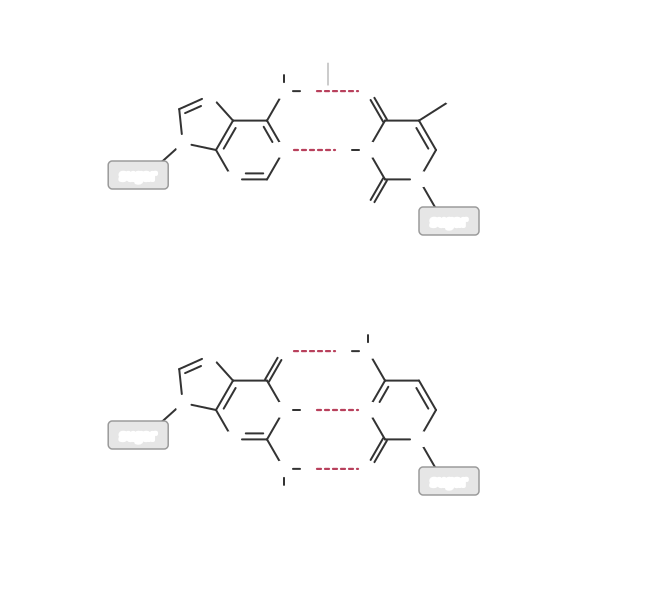
The two strands are held together by hydrogen bonds between the bases. The bases have N-H groups (H bonded to electronegative N) and lone pairs on N and O atoms, arranged so that only particular pairs line up correctly:
• adenine pairs with thymine (A-T), forming two hydrogen bonds
• guanine pairs with cytosine (G-C), forming three hydrogen bonds
Sign in free to see the rest of this lesson, the R.E.C.I.P.E. recall steps and the quiz
BrainCake is free. Make an account in seconds and pick up where this page stops.
More in Amino Acids, Proteins and DNA
- Secondary Structure of Proteins
- Tertiary Structure of Proteins
- Enzymes and Stereospecific Active Sites
- Drug Action and Enzyme Inhibitors
- Structure of DNA Nucleotides
- Cisplatin
- How Cisplatin Prevents DNA Replication
- Side Effects of Cisplatin
All 15 lessons in Amino Acids, Proteins and DNA · All AQA A-level Chemistry topics