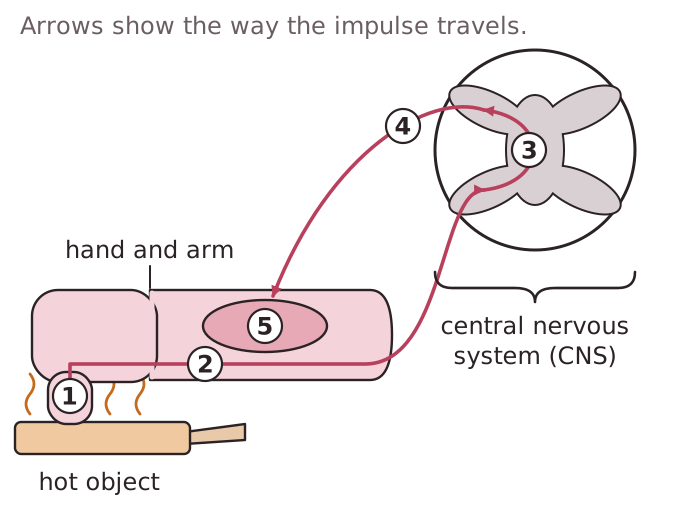
A reflex is a fast, automatic response to a stimulus. It does not involve conscious thought, so it happens before you have decided to do anything. Reflexes protect the body from harm, for example when you pull your hand away from something hot or blink when something flies towards your eye.
The pathway a reflex follows is called a reflex arc: stimulus, receptor, sensory neurone, relay neurone, motor neurone, effector, response. The relay neurone is in the spinal cord, so the impulse goes straight from the sensory neurone to the motor neurone without waiting for the brain to decide. The pathway has only three neurones and few synapses, and each synapse adds a small delay. Fewer synapses mean the response is fast. The long neurones with myelin sheaths also carry impulses quickly.
Reaction time is not the same as a reflex, because catching something involves conscious thought. You can measure it with a ruler drop. A partner holds a ruler upright with the zero level with your thumb and finger. They let go without warning and you catch it as fast as you can. Record how far it fell, repeat several times and calculate the mean. The further the ruler falls, the slower your reaction time. Keep other variables the same, such as the hand used and the starting position, so the test is fair.