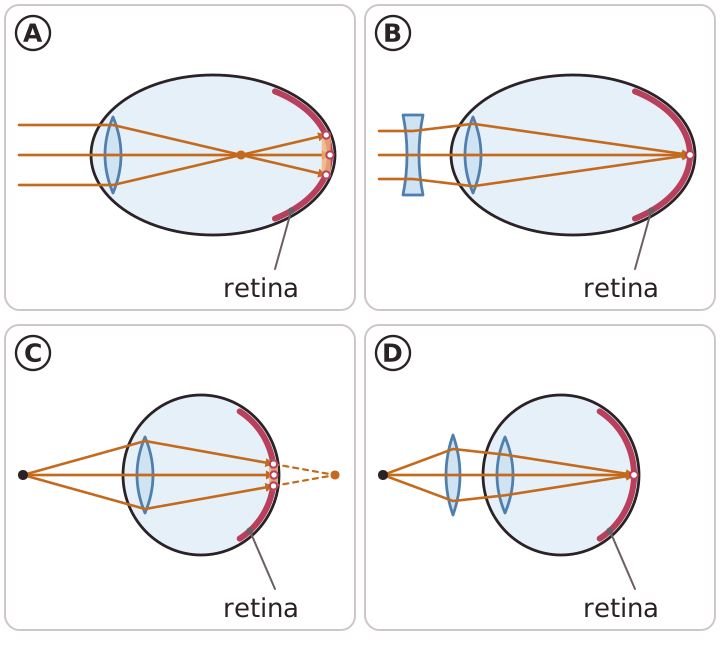
Some people have eyes that cannot focus properly, or that cannot detect colour normally.
A person with short-sightedness can see near objects clearly but not distant ones. The eyeball is too long, or the lens is too curved and refracts light too strongly, so the image is focused in front of the retina. It is corrected with a concave lens in glasses or contact lenses, which spreads the light out a little before it enters the eye.
A person with long-sightedness can see distant objects clearly but not near ones. The eyeball is too short, or the lens is too flat and cannot become curved enough, so the image would be focused behind the retina. It is corrected with a convex lens, which bends the light inwards before it enters the eye. Laser surgery that reshapes the cornea can also correct both defects.
Colour blindness is usually inherited. It is caused by faulty or missing cone cells in the retina, which normally detect different colours, so some colours cannot be told apart. The commonest type is difficulty telling red from green. There is currently no cure, though tinted lenses may help some people tell colours apart.