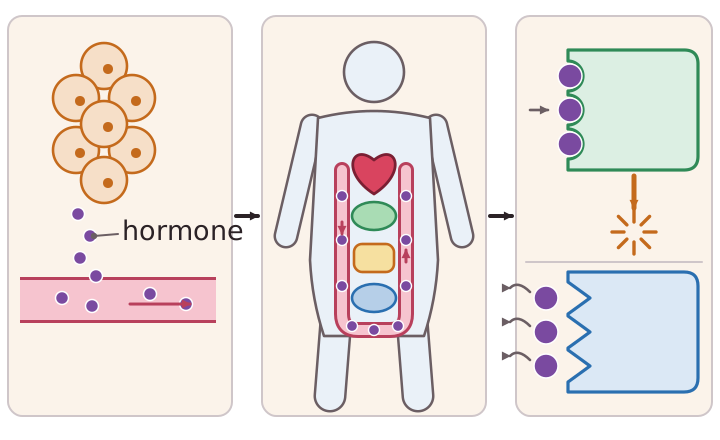
The body has two coordination systems. The nervous system uses electrical impulses. The endocrine system uses hormones, which are chemical messengers. A hormone is made in an endocrine gland, such as the pituitary gland, the thyroid gland, the ovaries or the testes. Endocrine glands have no ducts, so they release hormones straight into the blood.
The blood carries the hormone around the whole body. It only affects its target organs. Cells in a target organ have receptors on them that match the shape of that hormone. Cells without the matching receptor do not respond to it, even though the hormone passes by them.
Hormone responses are usually slower to start than nerve responses, because the hormone has to travel in the blood. The effects also last longer. The pituitary gland is often called the master gland because it releases hormones that control other glands.