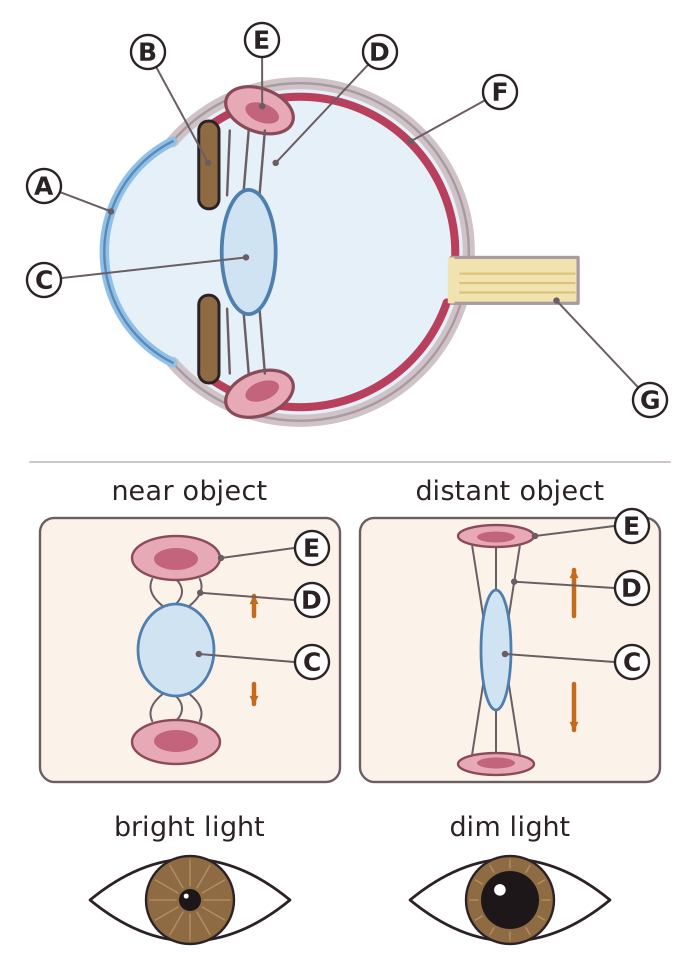
The eye detects light and focuses it so the brain can form a clear picture. Each main structure has a job.
- The cornea is the transparent front surface. It refracts (bends) light as it enters and does most of the focusing.
- The iris is a ring of muscle that controls how much light enters by changing the size of the pupil, the hole in its centre. In bright light the pupil gets smaller. In dim light it gets larger.
- The lens is transparent and flexible. It refracts light to focus it onto the retina.
- The retina is the light-sensitive layer at the back. It contains receptor cells that detect light and send impulses along the optic nerve to the brain.
The lens changes shape to focus on objects at different distances. It is held by the suspensory ligaments, which are attached to the ciliary body. The ciliary body contains ciliary muscles. To look at a near object, the ciliary muscles contract, the suspensory ligaments become slack and the lens becomes thicker and more curved. To look at a distant object, the ciliary muscles relax, the suspensory ligaments pull tight and the lens becomes thinner.