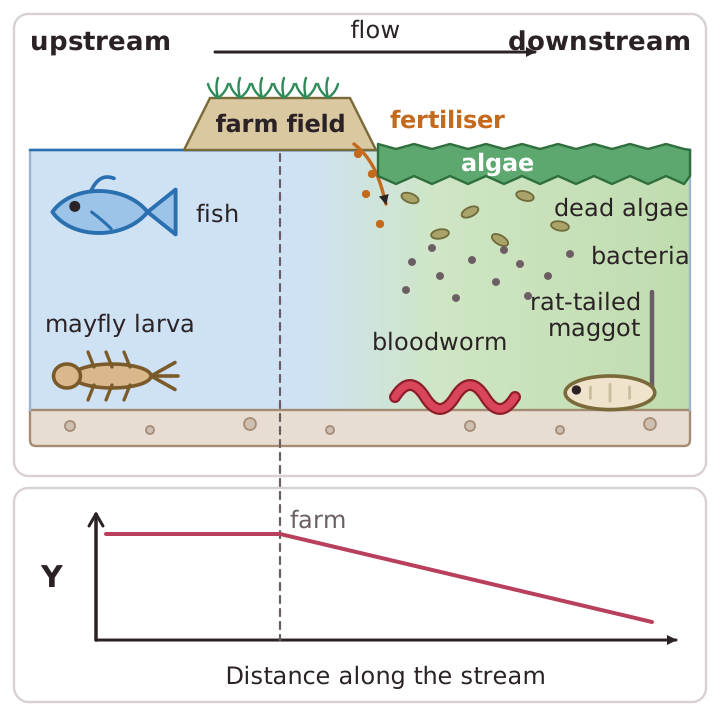
Environmental changes affect where organisms can live. Species that cannot tolerate a change move away or die, while tolerant species remain. An indicator species is one whose presence or absence tells you about conditions. In water, fertiliser or sewage run-off adds nitrates, so algae grow quickly. When the algae die, bacteria decompose them and use up the oxygen. Mayfly larvae need clean, well-oxygenated water, so they disappear. Bloodworms and rat-tailed maggots can survive in polluted water with little oxygen, so they become more common.
Atmospheric gases also affect distribution. Lichens are sensitive to sulfur dioxide, so a survey with few lichen species in a city centre and many far away suggests higher pollution in the centre. Rising carbon dioxide causes global warming. Some species are now found further towards the poles, or higher up mountains, where it is cooler.
To evaluate evidence, ask how good it is. A large sample, repeated results, surveys in many places and data over many years make evidence more reliable, as does accurate measuring of factors such as oxygen concentration. A correlation does not prove cause, because other variables such as temperature or pH may also differ between sites. Evidence is most convincing when the data are reliable and there is a clear scientific explanation for the link.