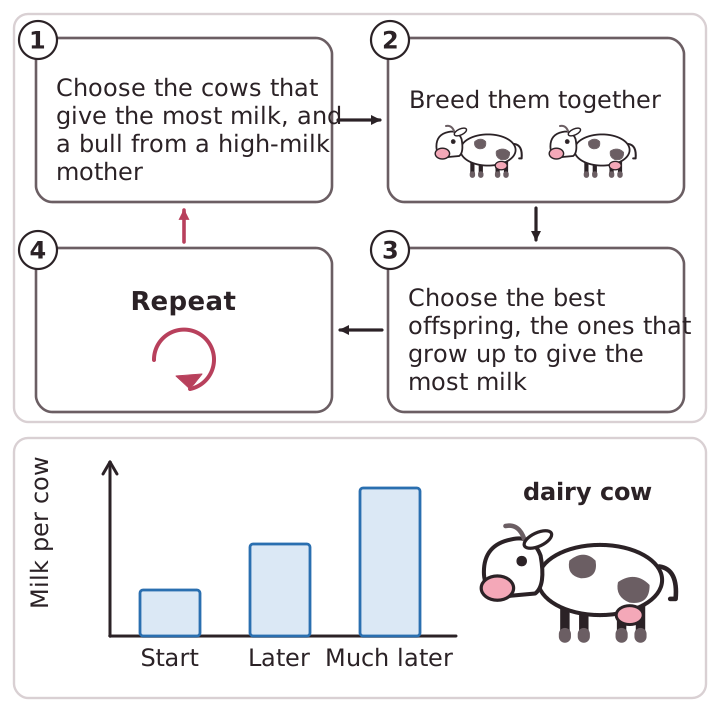
Selective breeding is when humans choose parents with the characteristics they want and breed them together. The best offspring are chosen to breed again, and this is repeated over many generations until the characteristic is strong in the whole population.
In food plants it has produced crops with higher yields, larger fruits, and resistance to disease. In domesticated animals it has produced cattle that give more milk, and chickens that grow faster and lay more eggs. This helps to increase the amount of food produced from the same land.
There are drawbacks. Breeding from only a few chosen individuals reduces the variation in a population, so one disease could harm all of them. Closely related animals may be bred together (inbreeding), which can increase harmful inherited problems. Research such as the Broadbalk experiment at Rothamsted Research, which has grown wheat on the same field for many years under different treatments, gives long-term data that helps scientists judge how yield is affected by crops and farming methods.