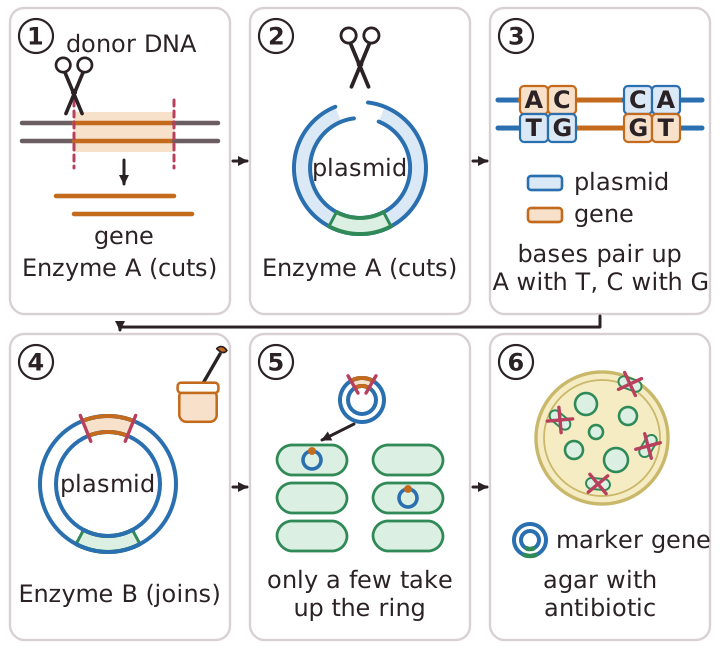
Genetic engineering follows a series of steps, using enzymes as molecular scissors and glue.
First the gene for the wanted characteristic is found, and it is cut out of the DNA using a restriction enzyme. This enzyme cuts the DNA in a way that leaves short single-stranded ends called sticky ends. A vector, often a plasmid taken from a bacterium, is cut open with the same restriction enzyme, so its sticky ends match the sticky ends on the gene.
The gene and the plasmid are mixed, and the sticky ends join together by base pairing. The enzyme ligase then joins the DNA strands permanently. The plasmid, now carrying the new gene, is put into host bacteria.
Only a few bacteria take up the plasmid. The plasmid also carries an antibiotic resistance marker gene. The bacteria are grown on agar containing the antibiotic, and only the bacteria that took up the plasmid survive. These are selected and grown so that they make the product of the gene.