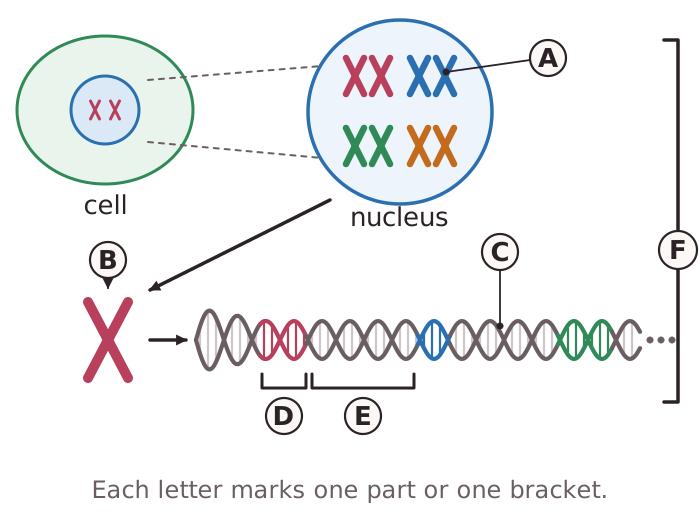
The genome of an organism is its entire genetic material. In a human, it is all of the DNA held on the chromosomes in the nucleus, including every gene and the DNA that lies between the genes.
It helps to keep the terms in order of size. The nucleus contains chromosomes. Each chromosome is one very long molecule of DNA. A gene is one short section of that DNA. The genome is all of the DNA put together, so a gene is only a small part of it.
The human genome contains about 20 000 genes, but most of the DNA in it does not code for a protein. This is called non-coding DNA. Scientists can read the order of the bases in a whole genome, which is called sequencing, and this lets them find genes and compare organisms.