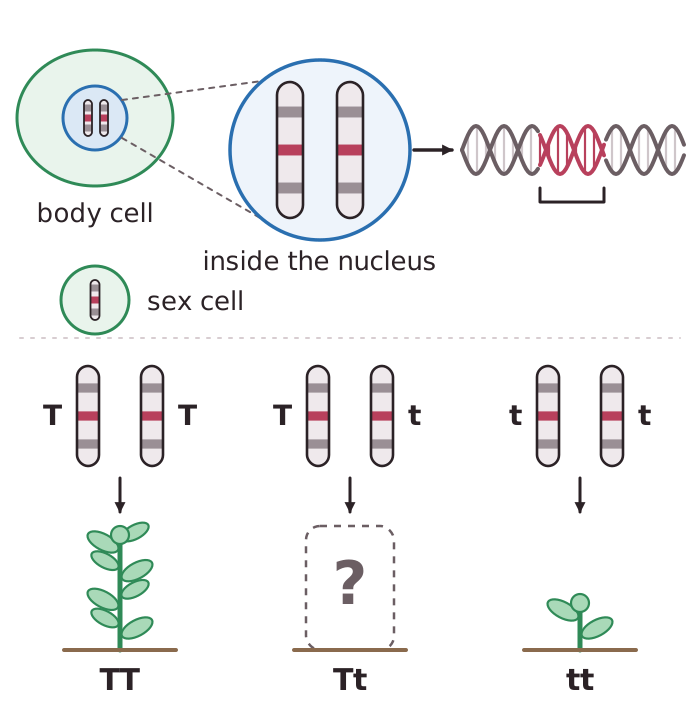
A gamete is a sex cell, such as a sperm or an egg. A chromosome is a long, coiled molecule of DNA found in the nucleus. A gene is a short section of DNA on a chromosome that codes for a protein. A gamete carries half the normal number of chromosomes, so it has only one allele of each gene.
Genes come in different versions called alleles (also called variants). Most cells carry two alleles of each gene, one from each parent. A dominant allele shows in the phenotype even when only one copy is present. A recessive allele only shows when two copies are present and there is no dominant allele. We write a dominant allele as a capital letter, such as T, and a recessive allele as a small letter, such as t.
Homozygous means the two alleles of a gene are the same, such as TT or tt. Heterozygous means the two alleles are different, such as Tt. The genotype is the combination of alleles an organism has. The phenotype is the characteristic you can see. In pea plants, if T (tall) is dominant to t (dwarf), then TT and Tt plants are both tall and only tt plants are dwarf.