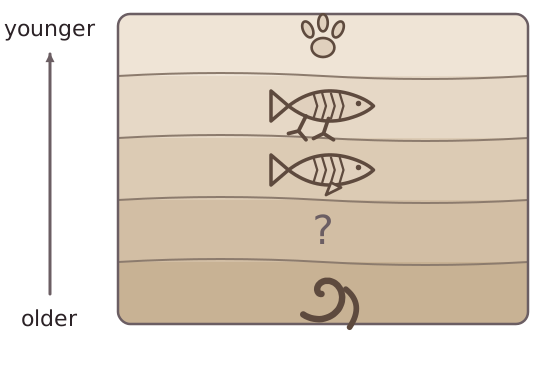
One piece of evidence for evolution is the fossil record. Fossils are the remains or traces of organisms that lived long ago, preserved in rocks. Older fossils are found in deeper rock layers. By putting fossils in order of age, scientists can see how organisms have gradually changed over time, and how some species have become extinct. The record is incomplete, because many organisms were soft-bodied and decayed before they could fossilise, and many fossils have not been found or have been destroyed.
Antibiotic resistance in bacteria gives evidence of evolution happening now. Bacteria reproduce very quickly, and mutations occur at random. A mutation may make a bacterium resistant to an antibiotic. When the antibiotic is used, non-resistant bacteria are killed, but the resistant bacteria survive and reproduce. They pass the resistance allele to their offspring, so resistant bacteria become the majority of the population. MRSA is a well known example.
Scientists must judge how strong evidence is. Fossils show change over very long periods but have gaps, while antibiotic resistance can be observed within a few years in the laboratory or in hospitals. Resistance is passed on in the genes of the bacteria.