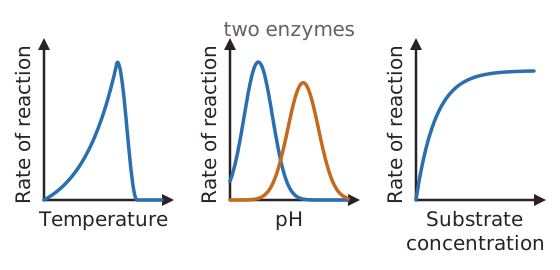
As temperature rises, enzyme and substrate particles gain more kinetic energy. They move faster and collide more often, so the rate of reaction increases. Each enzyme has an optimum temperature, about 37 °C for human enzymes, where it works fastest. On a graph, the peak shows the optimum, for example a peak at 45 °C means the optimum is 45 °C. Above the optimum the bonds break, the enzyme is denatured and the rate falls quickly. At low temperatures enzymes are not denatured, they just work slowly.
Each enzyme also has an optimum pH. Pepsin in the stomach works best in acidic conditions at about pH 2, while amylase works best at about pH 7. Away from the optimum the rate falls, and a pH that is too extreme denatures the enzyme.
Increasing substrate concentration raises the rate at first, because there are more collisions between enzyme and substrate. Eventually all the active sites are occupied, so the rate levels off. Adding more substrate makes no difference, because the amount of enzyme is now the limit.