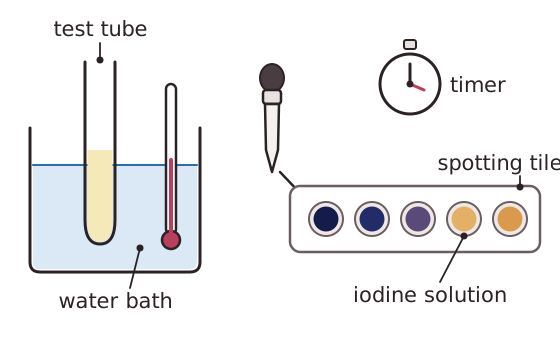
In this investigation the enzyme is amylase and the substrate is starch. We test starch with iodine solution. Iodine is orange-brown, and it turns blue-black when starch is present. When amylase has broken down all the starch, the iodine stays orange-brown.
Method: put starch solution and a buffer solution of one pH into a test tube. A buffer solution keeps the pH constant. Stand the tube in a water bath at a set temperature, add amylase and start a timer. Every 30 seconds, take a drop of the mixture and add it to a drop of iodine solution on a spotting tile. Record the time taken for the iodine to stay orange-brown. Repeat with buffers of different pH, such as pH 4 to pH 9. Wear eye protection, because iodine stains and irritates.
The independent variable is the pH. The dependent variable is the time taken for the starch to disappear. The temperature, the volumes and the concentrations of starch and amylase are control variables and must be kept the same. Rate can be found as 1 ÷ time, so a time of 100 s gives 1 ÷ 100 = 0.01 per second. A short time means a fast rate. Amylase works fastest at its optimum pH, about pH 7, and slows down at pH values either side. At extreme pH it may be denatured, and the rate is highest at the optimum.