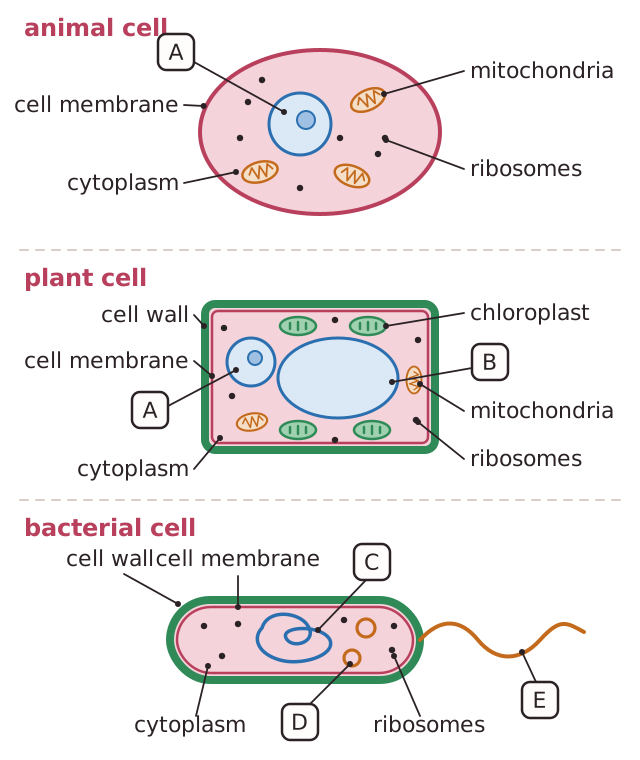
Animal cells are eukaryotic cells. Each structure inside the cell has a job. The nucleus contains the genetic material and controls the activities of the cell. The cell membrane controls what enters and leaves the cell. Mitochondria are where aerobic respiration releases energy. Ribosomes are where proteins are made. Many chemical reactions happen in the cytoplasm.
Plant cells have all of these structures and more. The cell wall is made of cellulose and strengthens the cell. Chloroplasts contain chlorophyll and carry out photosynthesis. The permanent vacuole is filled with cell sap and helps to keep the cell firm.
Bacteria are prokaryotic cells. They have no nucleus. Their genetic material is chromosomal DNA, a single loop lying free in the cytoplasm, and many also have small rings of plasmid DNA. A bacterium has a cell membrane, a cell wall and ribosomes. Many bacteria also have a flagellum (plural flagella), a whip-like tail that spins and moves the cell along.