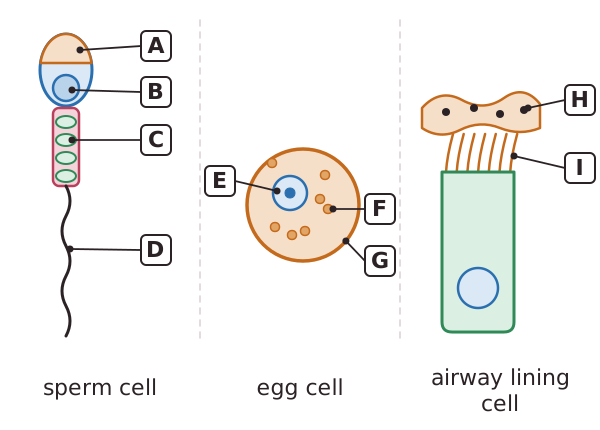
A specialised cell has features that suit it to its job. In sexual reproduction, the sperm cell and the egg cell each have a haploid nucleus, which contains only one set of chromosomes (half the normal number). When they fuse at fertilisation, the full number of chromosomes is restored.
A sperm cell is adapted to reach and enter the egg. Its tail moves it forward, and it has many mitochondria to release the energy needed for swimming. The acrosome at the front of the head contains enzymes that digest the outer layer of the egg cell so the sperm can get in.
An egg cell has a large amount of cytoplasm containing nutrients, which feed the early embryo. After one sperm enters, the cell membrane of the egg changes so that no other sperm can get in. This keeps the correct number of chromosomes in the embryo.
Ciliated epithelial cells line the airways. Each has many cilia, tiny hair-like projections that beat together to move mucus along. The mucus traps dust and pathogens, and the cilia move it away from the lungs.