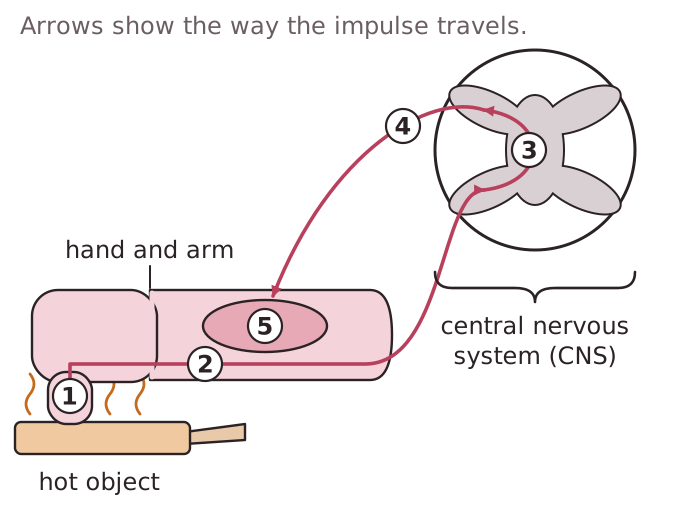
A reflex is a rapid, automatic response to a stimulus. You do not decide to make it. Reflexes protect the body from harm, for example when you pull your hand away from a hot object.
The pathway of impulses in a reflex is called a reflex arc. The order is: stimulus, receptor, sensory neurone, relay neurone, motor neurone, effector, response. The receptor detects the stimulus and the sensory neurone carries the impulse to the CNS. In the CNS, usually the spinal cord, a relay neurone passes the impulse on to a motor neurone. The motor neurone carries the impulse to the effector, which is a muscle or a gland, and the effector produces the response.
A reflex is fast because the pathway is short, with only a few neurones and synapses, and the brain does not have to make a decision before the response happens.