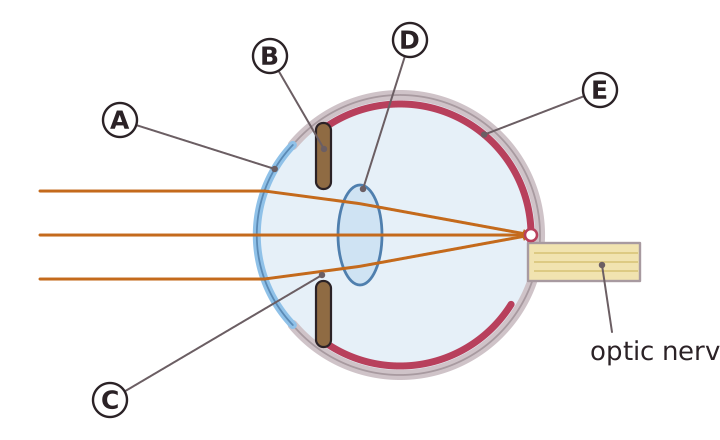
The eye is a sensory organ that detects light. Light first meets the cornea, the transparent front surface, which bends (refracts) the light most strongly. The light then passes through the pupil and the lens. The lens is clear and flexible, and it fine-tunes the focus so that a sharp image forms on the retina at the back of the eye.
The iris is a ring of muscle around the pupil. It controls how much light enters. In bright light the pupil gets smaller, which protects the retina from damage. In dim light the pupil gets larger, so that more light can enter.
The retina contains the receptor cells. Rod cells are very sensitive and work in dim light, but they cannot detect colour. Cone cells need brighter light and detect colour, because there are different types that respond to red, green and blue light. When the receptors are stimulated they send impulses along the optic nerve to the brain, which builds the image.