Several defects can stop the eye forming a clear image. A cataract is a cloudy patch in the lens. The cloudy area scatters light instead of letting it pass through, so the light is scattered and vision becomes blurred or dim. Cataracts mostly affect older people, and without treatment they can lead to blindness.
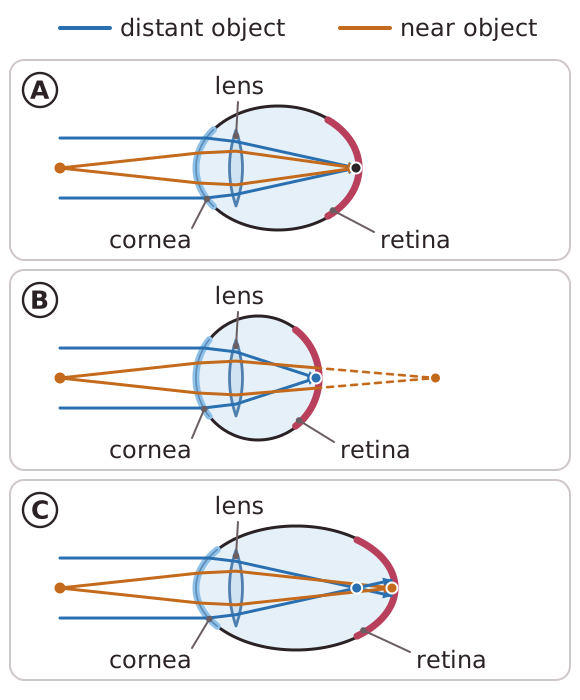
In long-sightedness a person can see distant objects clearly but near objects look blurred. The eyeball is too short, or the lens is too weak to refract light enough, so light from near objects is focused behind the retina.
In short-sightedness a person can see near objects clearly but distant objects look blurred. The eyeball is too long, or the lens is too strong, so light from distant objects is focused in front of the retina. A short-sighted person can read a book easily but struggles to read a road sign.
Colour blindness is usually inherited. It happens when one or more types of cone cell in the retina are faulty or missing, most often those for red and green light. It is more common in males than in females.