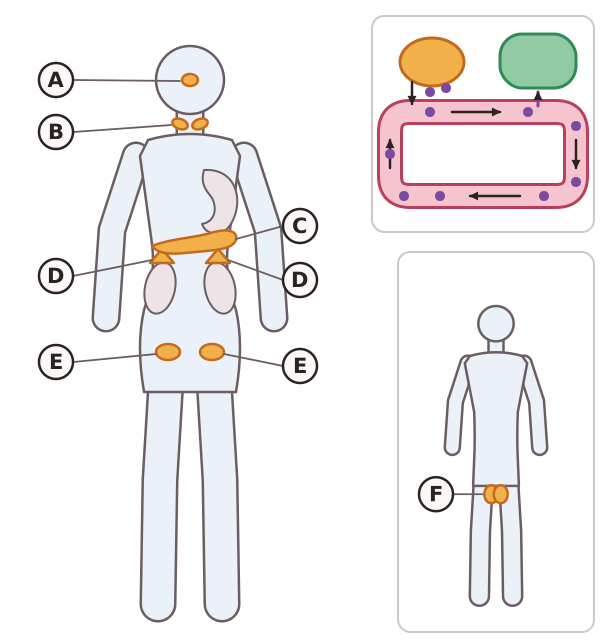
Hormones are chemical messengers. They are made in endocrine glands, which release their hormones directly into the blood. The blood carries each hormone around the body, but a hormone only affects its target organs, because only the cells there can respond to that particular hormone. Hormonal responses are usually slower than nervous responses, but they last longer.
The main endocrine glands are:
- the pituitary gland, in the brain, which releases hormones such as FSH, LH and TSH
- the thyroid gland, in the neck, which makes thyroxine
- the pancreas, which makes insulin and glucagon
- the adrenal glands, above the kidneys, which make adrenalin
- the ovaries, which make oestrogen and progesterone
- the testes, which make testosterone