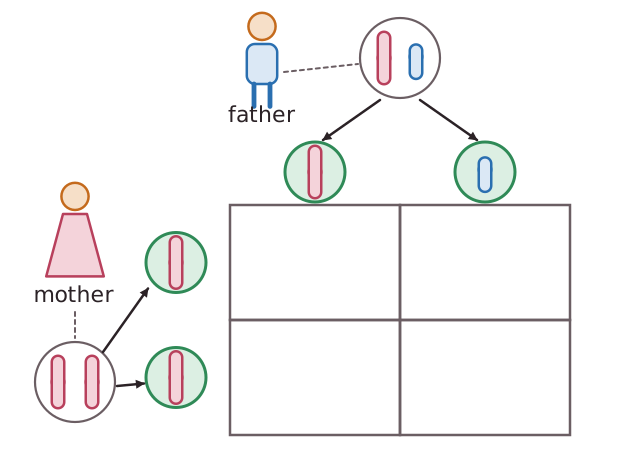
Ordinary human body cells contain 23 pairs of chromosomes. Twenty-two of these pairs control characteristics only. The remaining pair carries the genes that determine sex, so these are called the sex chromosomes.
There are two types of sex chromosome, X and Y. In females the sex chromosomes are the same (XX). In males the chromosomes are different (XY).
A genetic cross shows how sex is inherited. Every egg from a female carries an X chromosome. Sperm from a male are of two kinds: half carry an X chromosome and half carry a Y chromosome. If a sperm with an X fertilises the egg, the child is XX and is female. If a sperm with a Y fertilises the egg, the child is XY and is male.
Drawing the cross as a Punnett square shows four equally likely outcomes: two XX and two XY. The chance of each child being female is 1 in 2 (50%), and the chance of it being male is also 1 in 2 (50%). The ratio of females to males is therefore 1 : 1. This is only a probability. A family with four children does not always have exactly two girls and two boys.