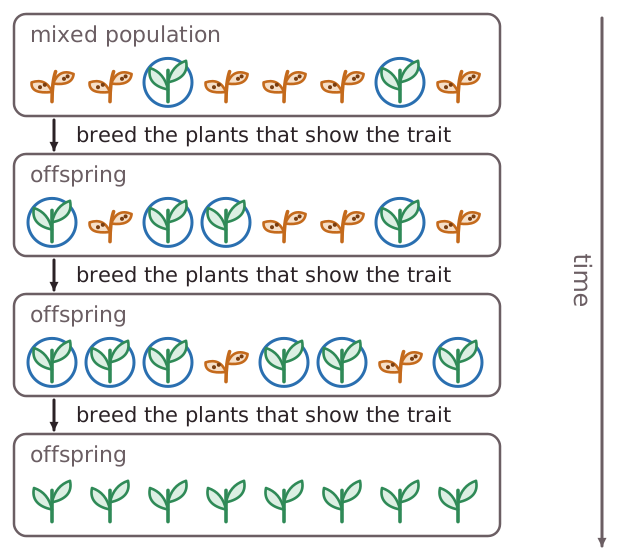
Selective breeding (also called artificial selection) is the process by which humans breed plants and animals for particular genetic characteristics. Humans have done this for thousands of years, ever since they first bred food crops from wild plants and domesticated animals.
The method starts with choosing parents with the desired characteristic from a mixed population. These are bred together. From the offspring, those with the desired characteristic are bred together. This continues over many generations until all the offspring show the desired characteristic.
The characteristic may be chosen for its usefulness or its appearance. Examples are disease resistance in food crops, animals that produce more meat or milk, domestic dogs with a gentle nature, and large or unusual flowers.
Selective breeding has a risk. It can lead to inbreeding, where some breeds are particularly prone to disease or inherited defects, because the individuals bred together are closely related and there is less variation.