A gamete is a sex cell. Chromosomes carry the genes, and a gene is a small section of DNA. Each gene may have different forms called alleles. Some characteristics are controlled by a single gene, such as fur colour in mice and red-green colour blindness in humans. Most characteristics are the result of multiple genes interacting.
The alleles an organism has are its genotype. They work at a molecular level to produce a characteristic, which is the phenotype. A dominant allele is always expressed, even if only one copy is present. A recessive allele is only expressed if two copies are present, so there is no dominant allele. If the two alleles are the same, the organism is homozygous for that trait. If they are different, it is heterozygous.
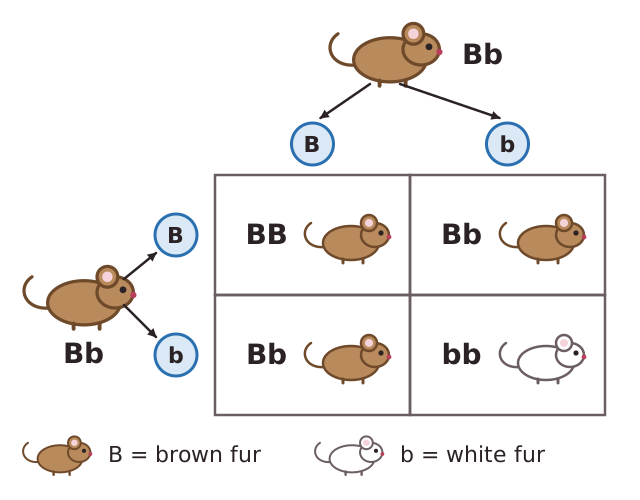
In mice, brown fur (B) is dominant and white fur (b) is recessive. Two heterozygous brown mice (Bb) each make gametes carrying B or b. A Punnett square shows the possible offspring: BB, Bb, Bb and bb. Three offspring in four are brown and one is white, a ratio of 3:1. A white mouse needs a recessive allele from each parent, so the probability is 1 in 4, or 25 per cent. This is only a chance, not a guarantee for any one litter.