A clone is an organism with the same genetic information as its parent. There are four methods you need to know. Tissue culture uses small groups of cells from part of a plant to grow identical new plants. It is important for preserving rare plant species and is used commercially in nurseries. Cuttings are an older, simple method used by gardeners to produce many identical new plants from a parent plant.
Embryo transplants split apart cells from a developing animal embryo before they become specialised. The identical embryos are then transplanted into host mothers.
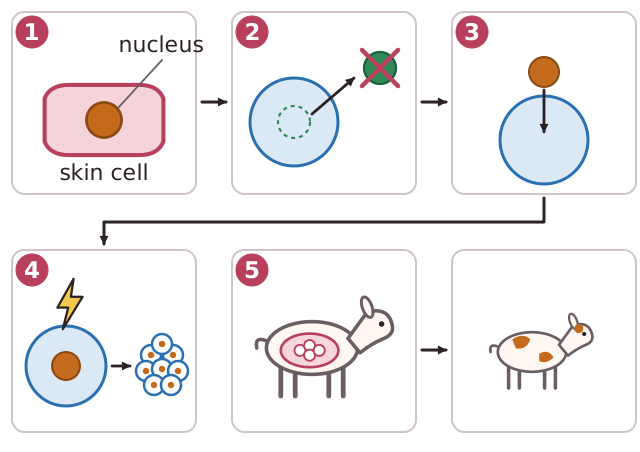
In adult cell cloning, the nucleus is removed from an unfertilised egg cell. The nucleus from an adult body cell, such as a skin cell, is inserted into the egg cell. An electric shock stimulates the egg cell to divide to form an embryo, whose cells contain the same genetic information as the adult skin cell. When the embryo has developed into a ball of cells, it is inserted into the womb of an adult female to continue its development.
Cloning has benefits, such as producing many identical copies of useful plants and animals. It also has risks, because the clones have the same genetic information, so there is less variation and a disease could affect them all. Some people have ethical objections to cloning animals.