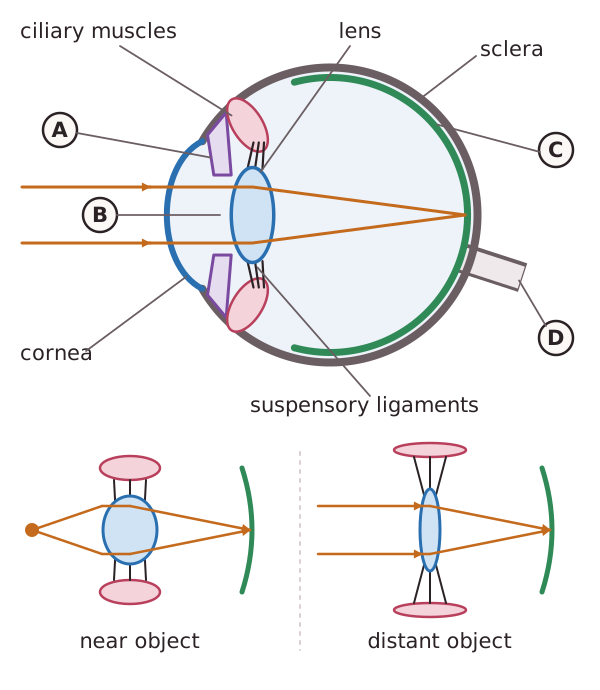
The eye is a sense organ. It contains receptors that are sensitive to light intensity and colour. Each part has a function. The cornea is the clear front surface and it refracts light into the eye. The iris is a ring of muscle that controls how much light enters through the pupil. The lens focuses light onto the retina, which contains the light receptors. The optic nerve carries impulses from the retina to the brain. The sclera is the tough white outer layer that protects the eye. The ciliary muscles and suspensory ligaments change the shape of the lens.
Accommodation is the process of changing the shape of the lens to focus on near or distant objects. To focus on a near object, the ciliary muscles contract, the suspensory ligaments loosen, and the lens becomes thicker so it refracts light rays strongly. To focus on a distant object, the ciliary muscles relax, the suspensory ligaments are pulled tight, and the lens is pulled thin so it only slightly refracts light rays.
In dim light the iris makes the pupil wider so more light can enter. In bright light the pupil gets narrower. Two common defects are myopia (short sightedness) and hyperopia (long sightedness), where light rays do not focus on the retina. They are generally treated with spectacle lenses that refract the light rays so they do focus on the retina. Newer treatments include hard and soft contact lenses, laser surgery to change the shape of the cornea, and a replacement lens in the eye.