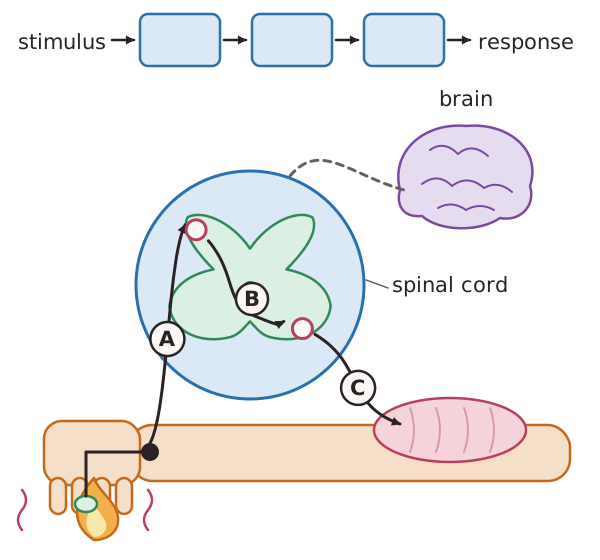
The nervous system lets humans react to their surroundings and coordinate their behaviour. A change in the surroundings is a stimulus. A receptor detects the stimulus, and information passes along nerve cells called neurones as electrical impulses to the central nervous system (CNS). The CNS is the brain and spinal cord. It acts as the coordinator and decides on the response. It then sends impulses to an effector, which is a muscle that contracts or a gland that secretes a hormone. The pathway is: stimulus, receptor, coordinator, effector, response.
A reflex action is automatic and rapid, and it does not involve the conscious part of the brain. This protects the body, for example by pulling your hand away from something hot before you have even thought about it. In a reflex arc, impulses travel along a sensory neurone from the receptor to a relay neurone in the CNS. The relay neurone passes the impulse on to a motor neurone, which carries it to the effector. Between two neurones there is a tiny gap called a synapse. Chemicals diffuse across the gap and set off a new electrical impulse in the next neurone.
Required practical 7 investigates the effect of a factor on human reaction time. A common method is the ruler drop test. One student drops a ruler without warning, and the other catches it as fast as possible. The distance the ruler falls before it is caught shows the reaction time, and a shorter distance means a quicker reaction. The independent variable might be caffeine or practice. Control variables include the same person, the same hand and the same ruler. Repeat the test several times and calculate a mean.