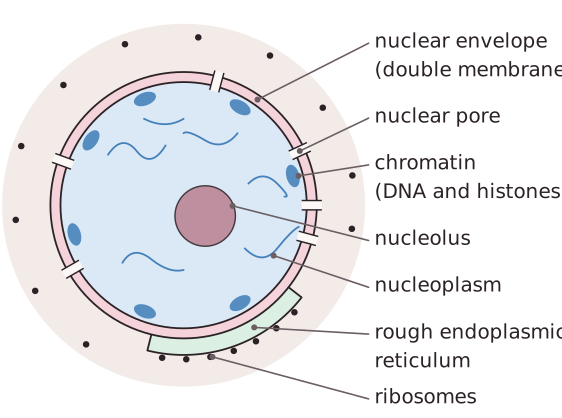
The nucleus is the largest organelle in the cell. It contains a substance called chromatin which is made from DNA - the genetic material - bound to proteins called histones.Structures called chromosomes become visible at the start of nuclear division when the DNA and histones tightly supercoil.DNA contains the information for the synthesis of all proteins needed by the cell, including enzymes.In this way it controls the activities of the cell.The nucleus is surrounded by a double membrane called the nuclear envelope.The nuclear envelope contains pores to allow the passage of substances such as mRNA and some steroid hormones in and out of the nucleus.