 BRAINCAKE
Growth Patterns
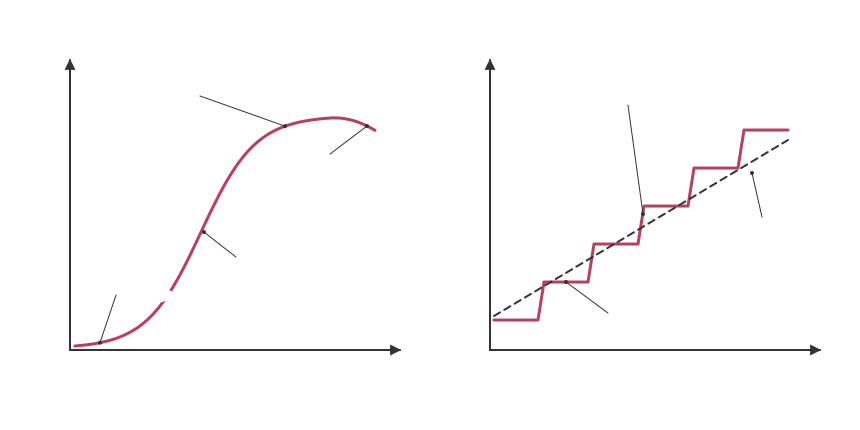
When size is plotted against time, the shape of the curve shows the growth pattern of an organism.
Sigmoid (S-shaped) growth is the most common pattern, seen in annual plants and many animals. There is a slow lag phase at first, when there are few cells; then a rapid phase in which the growth rate is greatest; then growth slows and the curve levels off at a plateau as the organism reaches its mature size. In old age there may be a decline in size (negative growth).
Sign in free to see the rest of this lesson, the R.E.C.I.P.E. recall steps and the quiz
BrainCake is free. Make an account in seconds and pick up where this page stops.
Key terms in this lesson
- exoskeleton
- A hard external skeleton, such as the cuticle of an insect, that supports and protects the body but must be shed for growth.
More in The Cell Cycle
- Asexual Reproduction
- Sporulation
- Regeneration
- Budding
- Vegetative Propagation
- Mitosis and Growth and Repair
- Measuring Growth
- Growth in Plants
All 18 lessons in The Cell Cycle · All Edexcel AS-level Biology topics