 BRAINCAKE
Growth in Plants
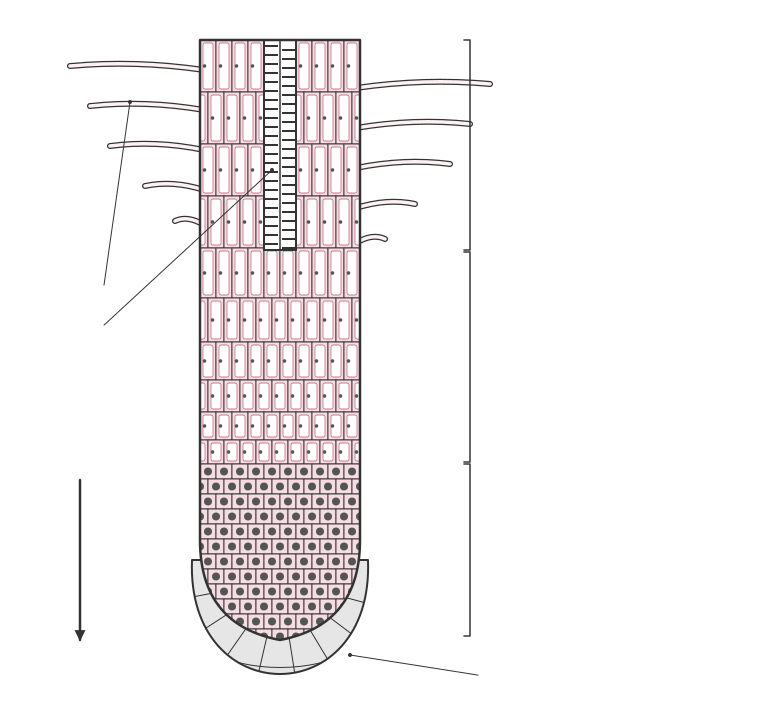
Unlike animals, in which cell division happens throughout the body, growth in plants is restricted to regions called meristems. Meristem cells are small, thin-walled and undifferentiated, with large nuclei, dense cytoplasm and no large vacuole, and they divide repeatedly by mitosis.
Apical meristems at the tips of shoots and roots produce primary growth: an increase in length. Lateral meristems, such as the vascular cambium in the stems of woody plants, produce secondary growth: an increase in width (girth), adding new xylem and phloem each year. In grasses, meristems at the base of the leaves (intercalary meristems) allow leaves to regrow after grazing or mowing.
Sign in free to see the rest of this lesson, the R.E.C.I.P.E. recall steps and the quiz
BrainCake is free. Make an account in seconds and pick up where this page stops.
Key terms in this lesson
- auxin
- A plant hormone that stimulates cell elongation and is involved in processes such as root formation in cuttings and shoot growth.
More in The Cell Cycle
- Asexual Reproduction
- Sporulation
- Regeneration
- Budding
- Vegetative Propagation
- Mitosis and Growth and Repair
- Measuring Growth
- Growth Patterns
All 18 lessons in The Cell Cycle · All Edexcel AS-level Biology topics