 BRAINCAKE
Plant Cells
Plant cells are eukaryotic cells. They contain all the main organelles of animal cells: a nucleus, cell surface membrane, cytoplasm, mitochondria, rough and smooth ER, Golgi apparatus, ribosomes and lysosome-like vesicles. They also have several structures that animal cells lack.
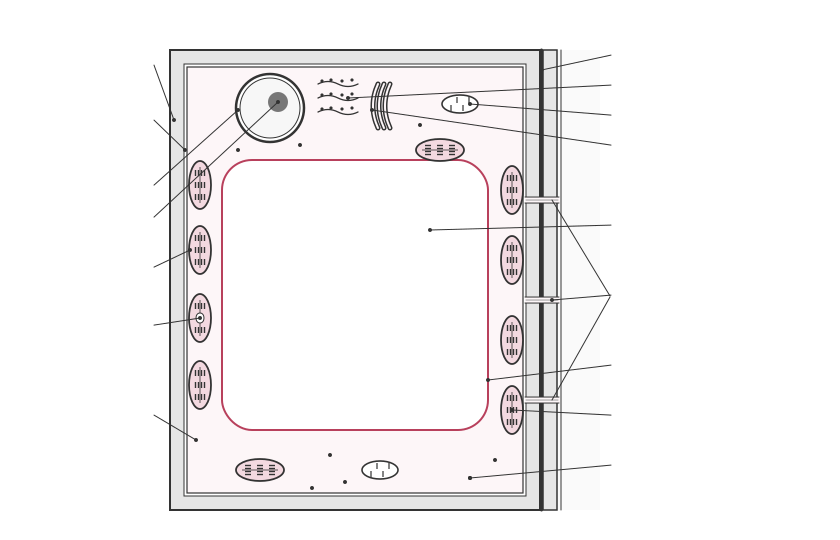
Structures found in plant cells but not animal cells
• a cell wall made mainly of cellulose, outside the cell surface membrane, which supports the cell and stops it bursting
• plasmodesmata, fine channels through the cell walls that connect the cytoplasm of neighbouring cells
• a large permanent vacuole surrounded by a membrane called the tonoplast, containing cell sap
Sign in free to see the rest of this lesson, the R.E.C.I.P.E. recall steps and the quiz
BrainCake is free. Make an account in seconds and pick up where this page stops.
Key terms in this lesson
- plasmodesmata
- Fine channels through plant cell walls that connect the cytoplasm of neighbouring cells, allowing transport and communication between them.
- chloroplast
- An organelle found in plant cells of green tissues that is the site of photosynthesis.
- amyloplast
- A plant organelle that stores starch, found for example in storage organs such as potato tubers.
More in Eukaryotic Cells
All 30 lessons in Eukaryotic Cells · All Edexcel AS-level Biology topics