 BRAINCAKE
Chloroplasts
Chloroplasts are the organelles in which photosynthesis takes place. They are found in plant cells of green tissues, especially palisade mesophyll cells in leaves, and in some protoctists (algae). They are usually disc- or lens-shaped, about 2 to 10 µm long.
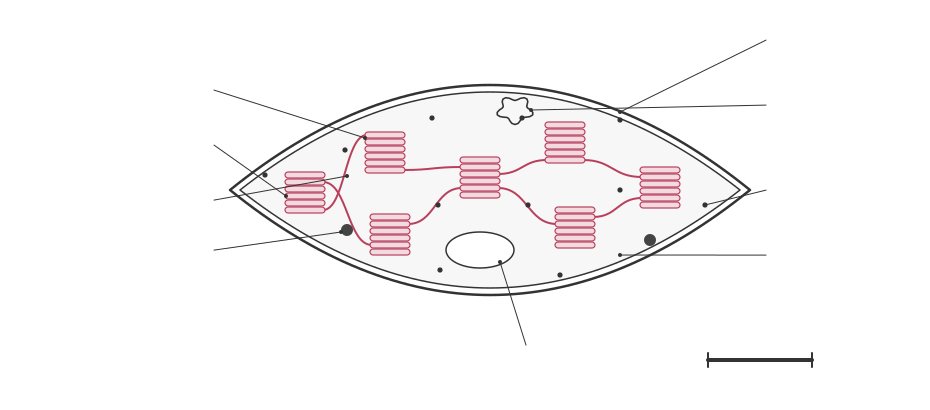
Structure
• Chloroplast envelope: a double membrane surrounding the organelle, which controls what enters and leaves.
• Thylakoids: flattened membrane sacs containing the photosynthetic pigments, such as chlorophyll, and the proteins of the electron transport chain and ATP synthase. Stacks of thylakoids are called grana (singular: granum).
• Intergranal lamellae: thylakoid membranes that link one granum to another.
Sign in free to see the rest of this lesson, the R.E.C.I.P.E. recall steps and the quiz
BrainCake is free. Make an account in seconds and pick up where this page stops.
Key terms in this lesson
- chlorophyll
- The main photosynthetic pigment in chloroplasts, found in the thylakoid membranes, which absorbs light energy for photosynthesis.
More in Eukaryotic Cells
- Lysosomes
- Plant Cells
- Plant Cell Walls
- Plasmodesmata
- Permanent Vacuole
- Organisation of Cells
- Epithelial Cells
- Organ Systems
All 30 lessons in Eukaryotic Cells · All Edexcel AS-level Biology topics