 BRAINCAKE
Phospholipid Bilayer
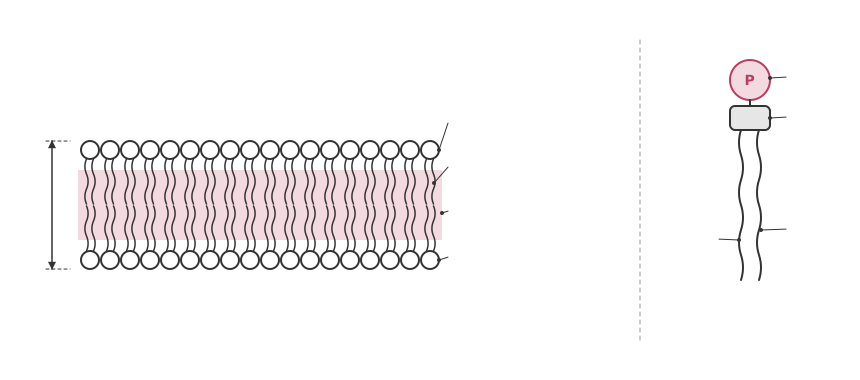
The basic structure of every membrane is a phospholipid bilayer. A phospholipid molecule is made from glycerol, two fatty acids and a phosphate group.
The phosphate-containing head is charged, so it is hydrophilic (attracted to water). The two fatty acid tails are non-polar, so they are hydrophobic (repelled by water).
Sign in free to see the rest of this lesson, the R.E.C.I.P.E. recall steps and the quiz
BrainCake is free. Make an account in seconds and pick up where this page stops.
Key terms in this lesson
- aquaporin
- A channel protein in a cell membrane that allows water molecules to pass through rapidly by facilitated diffusion.
More in Eukaryotic Cells
- Transmission Electron Microscope
- Scanning Electron Microscope
- Ultrastructure
- Membranes
- Membrane Proteins
- Fluid Mosaic Model
- Eukaryotic Cells
- Protoplasm
All 30 lessons in Eukaryotic Cells · All Edexcel AS-level Biology topics