 BRAINCAKE
The Bohr Effect
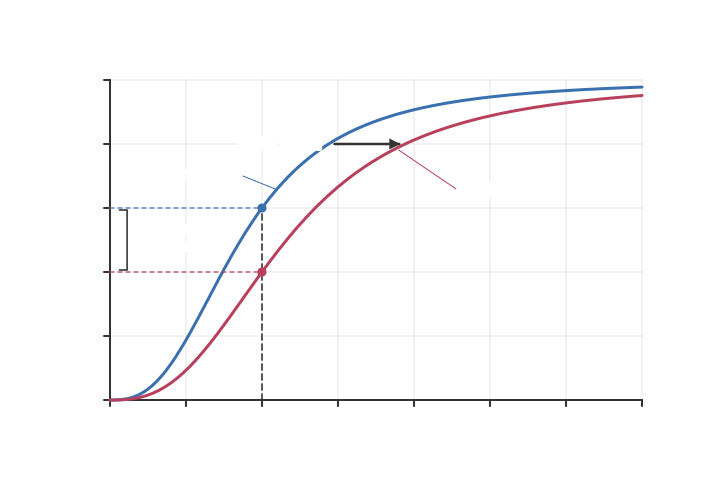
The Bohr effect (Bohr shift) is the decrease in the affinity of haemoglobin for oxygen when the partial pressure of carbon dioxide (pCO2) is high. It causes the oxygen dissociation curve to shift to the right.
How it happens:
• carbon dioxide from respiration enters the erythrocytes, where the enzyme carbonic anhydrase catalyses its reaction with water to form carbonic acid
• carbonic acid dissociates into hydrogen ions (H+) and hydrogencarbonate ions
• the H+ ions bind to haemoglobin, changing its shape and reducing its affinity for oxygen, so oxyhaemoglobin releases more oxygen
Sign in free to see the rest of this lesson, the R.E.C.I.P.E. recall steps and the quiz
BrainCake is free. Make an account in seconds and pick up where this page stops.
More in Circulatory Systems
- Agranulocytes
- Platelets
- Haemoglobin and Oxygen Transport
- Oxygen Dissociation Curve for Haemoglobin
- Fetal Haemoglobin
- Myoglobin
- Transport of Carbon Dioxide
- Blood Clotting
All 33 lessons in Circulatory Systems · All Edexcel AS-level Biology topics