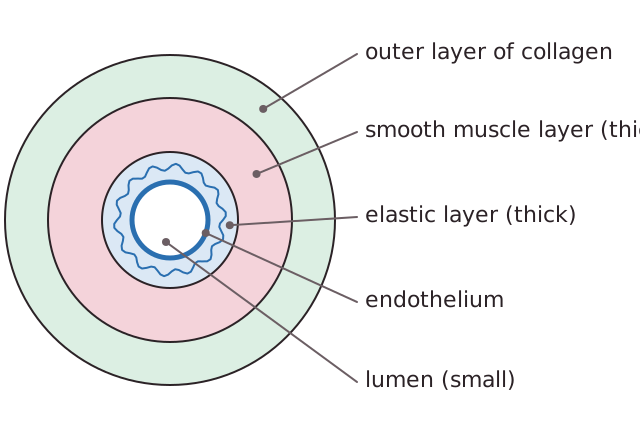
The function of arteries is to transport blood rapidly under high pressure from the heart to the tissues. The muscle layer is thick compared to the veins. This means that smaller arteries can be constricted and dilated in order to control the volume of blood passing through. The elastic layer is relatively thick compared to veins.During systole the elastic layer stretches and during diastole the elastic layer recoils. The stretching and recoiling action of the elastic layer maintains high blood pressure. The overall thickness of the wall is great as it resists bursting the vessel under high pressure. There are no valves as the blood tends not to flow backwards as the blood is under high pressure. However, there are valves in the arteries leaving the heart.